Mattress materials & design
Dunlop Latex Mattresses: How Construction Shapes Comfort
A latex mattress can feel buoyant, gently contouring, or distinctly firm. The difference is rarely explained by the word “latex” alone. Core thickness, firmness, layering, cover materials, and the foundation beneath the bed all contribute to the experience—details worth understanding before choosing a mattress.
Dunlop latex has a quietly distinctive character: resilient, responsive, and supportive without the slow, enveloping sensation associated with some foams. Yet no single description can capture every Dunlop latex mattress. Construction determines how readily the surface yields to the shoulders and hips, how much a sleeper settles into the bed, and how the mattress responds when they shift position.
For anyone comparing natural latex mattresses, the useful questions are practical rather than grand. How thick is the latex core? Are there separate comfort and support layers? What does the manufacturer mean by “medium” or “firm”? Is the latex certified, and what other materials are present? What foundation and care routine does the mattress require?
These details turn a material label into a more considered picture of the bed. They also help distinguish a simple latex core from a layered design, or an all-latex mattress from a hybrid that combines latex with another support system. The aim is not to find a universally perfect mattress, but to understand which construction is more likely to suit your body, sleep position, and preferences.
What Dunlop latex is—and what it does
Latex foam is made from rubber, which may be natural, synthetic, or a blend. Dunlop describes a manufacturing method rather than a guarantee of a mattress’s complete material profile. In broad terms, liquid latex is whipped into a foam, placed in a mold, and heated to set. The resulting material forms an elastic core with a springy response.
That response is one reason latex feels different from many conventional foams. It tends to compress under pressure and push back more promptly as pressure changes. A sleeper may feel supported on the surface rather than slowly sinking into a deep impression. The sensation is not identical across products: the formulation, density, firmness, thickness, and surrounding layers all matter.
The phrase “natural latex” also deserves a careful reading. It generally indicates that natural rubber is part of the latex material, but it does not, by itself, establish that every component of the finished mattress is natural or organic. Covers, adhesives, fire-barrier materials, and other layers may differ. Reviewing the full materials list and relevant certifications is more informative than relying on a broad front-label claim.
The layers beneath the feel
Think of mattress construction as a composition. The uppermost layers shape first contact and cushioning; deeper layers influence how far the body settles and how support is distributed. In an all-latex mattress, those layers may consist of latex cores with differing firmnesses. In a hybrid design, latex comfort layers may sit above pocketed coils or another support structure.
A single, relatively uniform latex core can make for a straightforward feel. A layered mattress can offer more opportunities to tune comfort: a softer upper layer may ease pressure at the surface, while firmer material below can limit excessive sink. Neither approach is automatically superior. Simplicity may appeal to sleepers who want a consistent, direct response; layered construction may suit those who want more variation or adjustability.
Layer thickness matters alongside firmness. A thicker comfort layer generally gives the body more material in which to settle before reaching firmer support beneath. A thinner comfort layer may feel more immediate and connected to the core. The effect depends on the sleeper and the rest of the build, so thickness alone should not be treated as a comfort rating.
Some mattresses organize latex into zones, with different support characteristics across areas of the bed. The intention is to respond differently beneath regions such as shoulders, hips, or legs. Zoning can be useful to consider, but its value depends on a sleeper’s proportions, position, and comfort preferences. A zone that suits one person may not correspond in the same way for another.
Firmness is personal, not a universal scale
Firmness labels are useful as a first point of comparison, but they are not a standardized promise of feel across brands. One company’s medium may feel firmer or softer than another’s, and the same mattress can feel different to people with different body weights, shapes, or sleeping habits. A specification such as ILD—Indentation Load Deflection—can provide a technical reference for how much force is required to compress a foam sample, but it should not be mistaken for a complete prediction of comfort.
Sleep position offers a helpful starting point. Side sleepers often look for enough surface give to accommodate shoulders and hips, while maintaining support through the rest of the body. Back sleepers may prefer a balanced surface that cushions without allowing the pelvis to settle too far. Stomach sleepers commonly pay close attention to whether the middle of the body feels adequately supported. These are broad considerations, not rules: individual anatomy and preference remain decisive.
When testing a mattress, take time in your usual sleep positions rather than judging it from a brief sit on the edge. Notice whether pressure builds at the shoulders, hips, or knees; whether changing positions feels easy; and whether the bed’s surface feels supportive without being harsh. If two people share a bed, both should test it when possible. A split or independently customizable design may be relevant when partners want different firmness levels.
Keep in mind, too, that a mattress does not work in isolation. A pillow that is too high or too low can affect neck comfort, while a flexible or inadequate foundation may alter how the mattress performs. Sheets and protectors can subtly change the surface sensation, especially if they are thick, tightly fitted, or heavily quilted.
Natural, organic, and certified: read the specifics
Certification can help buyers verify certain claims, but each certification has a defined scope. For example, GOLS is associated with organic latex, while GOTS addresses organic textile processing and related requirements. A mattress may use one certified material alongside other components that are not covered by that certification. Look for the exact product or component included in the claim, and check current documentation from the certifying organization or manufacturer.
It is also useful to distinguish between “natural” and “organic.” The words can describe different things and should not be used as interchangeable shorthand. Ask what proportion of the latex is natural, whether the latex itself is certified, and what materials make up the cover, quilting, and fire barrier. An ingredient list or layer diagram is often more revealing than an abbreviated product name.
Certifications do not tell you whether a mattress will feel comfortable, fit your frame, or last for a particular number of years. They can contribute to material transparency, while firmness, construction, fit, warranty terms, return conditions, and care instructions answer other questions. A thoughtful comparison considers all of these rather than expecting a single label to settle the decision.
All-latex or hybrid?
An all-latex mattress uses latex as its principal support and comfort material, often in multiple layers. A latex hybrid pairs a latex comfort surface with a coil support system. The latter may appeal to people who want the responsive quality of latex with a distinct spring-based support structure. It may also have a different edge feel, weight, or degree of motion transfer from an all-latex design, depending on how it is built.
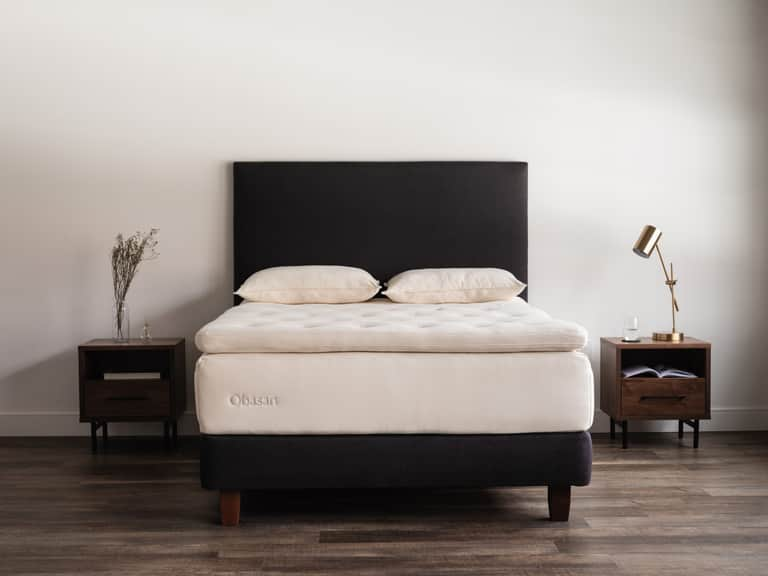
For instance, the Obasan Grand Dunlop Latex Mattress illustrates a layered, customizable all-latex approach. Its listed construction includes Dunlop latex comfort and support layers, a wool-and-rubber topper, and an organic cotton and wool cover. The product information describes choices in lower-layer firmness and a zoned center section, as well as care requirements such as using a breathable slatted foundation and avoiding moisture and direct heat. Those particulars are useful examples of how construction and maintenance can be part of the same decision.
For a contrasting configuration, the Naturepedic EOS Pillowtop Organic Hybrid Mattress combines an organic Dunlop latex comfort layer and pillowtop with an eight-inch coil support layer. Its product description presents firmness customization, including options to configure sides independently in certain sizes. This is a hybrid rather than an all-latex mattress, but it shows how latex can occupy one part of a broader support system.
These examples are not a substitute for checking current specifications, availability, and policies. They simply make the central point tangible: the material name is only one part of the design. A latex mattress with a deep, plush comfort layer may feel quite unlike a firmer mattress built around a more uniform core.
Height, foundation, and the finished bed
Mattress height affects more than appearance. It can influence the ease of getting in and out of bed, the overall height of the sleeping surface once a foundation is added, and whether fitted sheets have sufficient pocket depth. Compare the mattress dimensions with the bed frame, headboard, and existing bedding before purchase. For a layered mattress, also check whether the stated height includes a topper.
The foundation is a structural partner, not an afterthought. Follow the mattress maker’s requirements for slat spacing, center support, and frame type. A breathable slatted base is commonly specified for latex products, but the exact spacing and support needs vary by mattress. Placing a mattress directly on the floor or on an unsuitable solid surface may conflict with care guidance and can restrict airflow. The manufacturer’s instructions should take precedence over general advice.
Weight and assembly are worth considering, too. Latex cores can be substantial, and a multi-layer mattress may arrive in separate components that need arranging inside a cover. That can make future layer adjustment possible, but it also means moving or rotating the bed may require planning. Check delivery details and whether the mattress is designed to be flipped, rotated, or adjusted before assuming that one care routine applies to all models.
Care that preserves the construction
Latex mattresses are not generally washed as a whole. Covers may be removable on some models, but removable does not necessarily mean machine washable. Read the care label before unzipping, laundering, or spot-cleaning any component. Excess water can be difficult to remove from dense materials, and heat or direct sunlight may be unsuitable for certain latex and textile components.
For many beds, a well-fitting mattress protector is a practical first line of defence against sweat, spills, dust, and everyday wear. Choose one that fits the mattress depth and does not create a surface feel you dislike. A breathable protector can help preserve the bed’s original feel more discreetly than a bulky quilted layer, though waterproof styles differ in construction and hand-feel.
A breathable mattress protector, such as the Casper Breathable Mattress Protector, is described as guarding against normal wear while allowing airflow and preserving the feel of a compatible mattress. It is an accessory rather than a latex mattress component, but protection is relevant to the longevity and upkeep of any sleep setup. Confirm fit and compatibility before selecting a protector.
Rotate or flip the mattress only when the instructions recommend it. Some latex mattresses are designed with a specific top and bottom, while others may permit periodic rotation or layer repositioning. Keep the bed dry, support it as directed, and address spills promptly using the manufacturer’s approved method. Care instructions can affect warranty coverage, so save them alongside the purchase documents.
A considered checklist for comparing mattresses
When a product description feels crowded with technical language, return to a short list of concrete questions. The answers make comparisons easier and help separate verifiable details from impressionistic claims.
- What is the full construction? Identify the number and order of layers, their thicknesses, and whether the mattress includes coils or other support materials.
- What does the firmness description mean? Look for the manufacturer’s scale, any available technical measurements, and whether firmness can vary by layer or side.
- Which materials are certified? Confirm whether claims apply to the latex, textiles, finished mattress, or a specific component.
- How tall and heavy is the mattress? Check frame compatibility, fitted-sheet depth, delivery requirements, and whether assembly is needed.
- What support does it require? Review slat spacing, center support, and any restrictions on platform or adjustable foundations.
- What are the trial, return, and warranty terms? Read the conditions carefully, including fees, exclusions, and required maintenance.
- How should it be cleaned and maintained? Establish whether it can be rotated, whether the cover is washable, and how to handle spills.
The right latex mattress is a matter of proportion
Dunlop latex offers a distinctive combination of resilience and support, but its reputation cannot predict the feel of every bed. Construction gives the material its context: a soft upper layer can alter the first impression, a firm core can shape deeper support, and wool or cotton components can influence the surface and care routine. A hybrid arrangement introduces another support system altogether.
Compare the actual layers, not just the category. Consider firmness in relation to your sleeping position and body, test the mattress for long enough to notice pressure and ease of movement, and check the foundation and care requirements before committing. For natural latex mattresses, examine certification claims component by component and read the full materials information.
The most elegant choice is often the one that makes sense in daily life: comfortable in your usual position, compatible with your bed frame, clear about its materials, and manageable to care for. With those details in view, the language of latex becomes less mysterious—and the search for a mattress becomes a more confident exercise in finding the right balance of cushion, support, and response.